Pickleball Court Surfaces Compared: Acrylic, Cushioned, Tile and More
A pickleball court isn't just concrete with paint on top. The surface layer between your slab and your paint changes how the ball bounces, how your joints feel, and how long you'll wait before resurfacing. Here's how acrylic, cushioned, and tile actually compare.
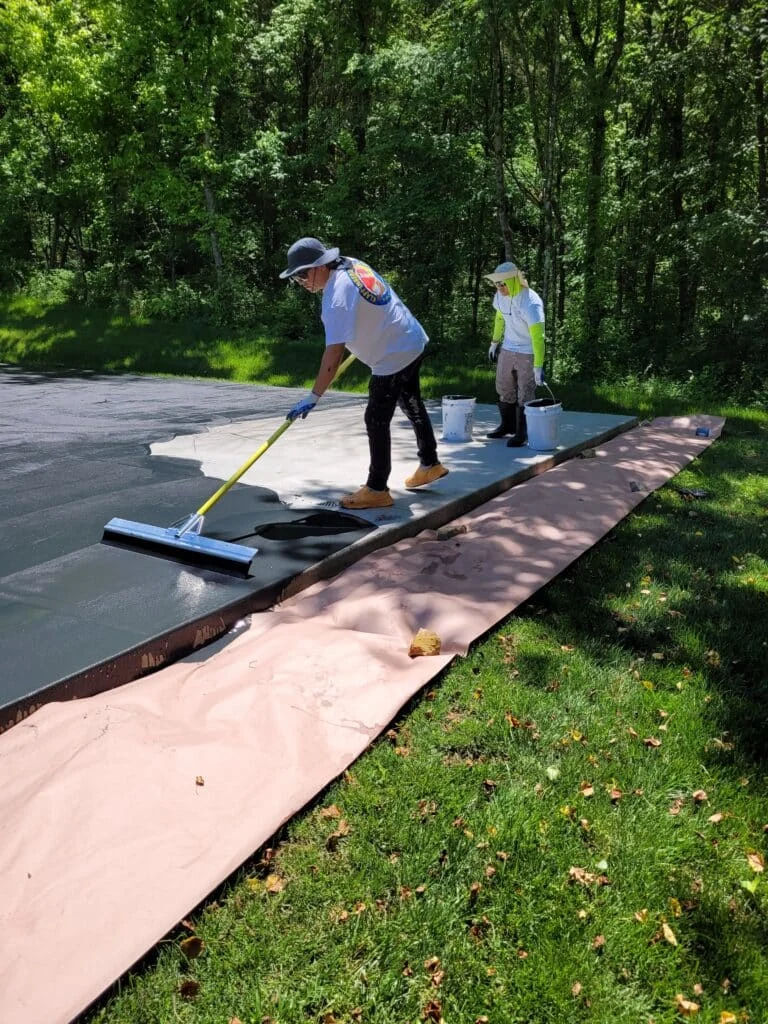
Not everyone realizes that a pickleball court isn't just concrete with paint on top. One of the most consequential parts of any court is the surface layer — the material that sits between your slab and your paint. There are two real options here: acrylic or a cushioned system. Some companies also offer a plastic tile overlay (more on that below). Here's how they actually compare.
What Is an Acrylic Surface?
Acrylic is the most common surface, and it's probably what you've played on most. It's made from 100% liquid acrylic resin mixed with sand and color pigments, applied directly onto your concrete or asphalt slab. It's incredibly thin, as little as 1 millimeter, or about 1/16 of an inch, so you won't notice it as a separate layer at all. Its job is straightforward: give you a smooth, consistent bounce, block moisture from reaching your slab, and provide a clean base underneath your paint.
What Is a Cushioned Surface?
A cushioned surface uses the same basic mixture, but with thicker rubber layers built in beneath it. Where acrylic runs as thin as 1/16 of an inch, cushioned systems typically run between 1/8 and 3/8 of an inch. Cushioning is usually an add-on rather than a standard option, and it benefits players looking for a softer surface, especially if joint comfort is a priority, which makes it a popular choice for older players.
What About Modular Tile?
Many companies also offer modular tile as a different solution for pickleball courts. The advantage of this option for some folks is that it's easy to take on or take off, almost like puzzle pieces, and the tiles won't crack on top if the foundation underneath does. However, we don't use tile in any of our courts because it doesn't work well for real pickleball. The tile is made of plastic that has holes in it. This leads to wildly inaccurate bounces and makes it difficult to run and slide like you're supposed to on a pickleball court.
How Long Each Surface Lasts
Acrylic surfaces typically need resurfacing every 4-8 years. Cushioned surfaces tend to last a bit longer, up to around 10 years, thanks to their thicker construction. Ultimately, it depends most on your foundation. Before any surface goes down, you need a base, either concrete or asphalt. Your base choice affects long-term durability and cracking. For the full breakdown, see our foundation guide.
Cost Differences
Standard acrylic resurfacing and painting typically runs $5,000 to $10,000 total. Cushioning is usually an add-on beyond that, adding another $6,000 to $8,000 on top of standard servicing.
My Recommendation as a Player
Personally, I prefer courts without cushion. At a high level, the added softness changes the bounce just enough that I notice it, and it affects how I play. For most players, that difference isn't really noticeable, so it comes down to budget and personal preference.
If court feel matters to you, or you're dealing with joint issues, cushion is a smart choice. If you're working with a tighter budget, acrylic is the better call, and it's still an excellent surface on its own.
Get a Surface Recommendation for Your Climate
The right surface depends on your climate, your budget, and how you plan to use the court. Our resurfacing page covers surface options in more detail, our Construction hub walks through the full build process, and our pickleball court cost guide breaks down how surface choice affects your total price.
Not sure which surface is right for your court? Book a free consult and we'll help you figure out what fits your climate and your game.
Ready to Build Your Court?
Book a free 15-minute call with Alex and get expert insight specific to your yard and goals.
Book Free Consult