Backyard Pickleball Court Cost (2026 Guide)
How much does a backyard pickleball court cost in 2026? Pro player Alex Neumann breaks down the four factors that drive your total price — from foundation type to region — plus real cost ranges so you can budget with confidence.
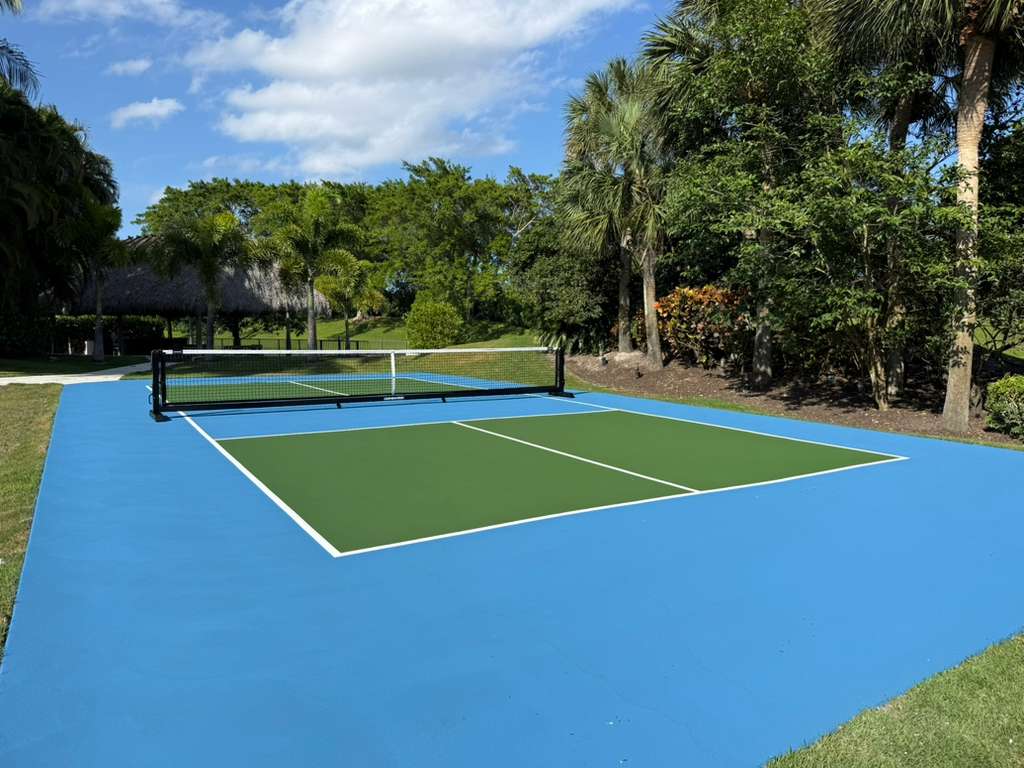
The number one question I get from homeowners and property owners is: how much is a backyard pickleball court going to cost? It's also the hardest question to answer with a single number — because the honest answer is: it depends. This guide covers new builds — if your existing court just needs work, resurfacing is usually the more affordable option.
But "it depends" isn't good enough when you're trying to plan a real project and budget accordingly. So in this guide, I'm going to break down exactly what drives the cost of a backyard pickleball court in 2026 — with real numbers, from someone who has helped build hundreds of courts across the country and competed as a professional player on just as many.
Here are the four main cost factors you need to understand — and what to realistically expect for your total investment.
The 4 Main Factors That Drive Pickleball Court Cost
Factor 1: Size and Space
People don't always think about this one, but court size has a direct impact on your total cost.
The official pickleball court dimensions are 44 feet by 20 feet — but that's just the playing lines. That's not how large your total court area should be, and building to the bare minimum is one of the most common mistakes I see homeowners make.
The standard backyard build is 60 feet by 30 feet, which gives you 8 feet behind the baselines and 5 feet on each side. That's the baseline (no pun intended) for comfortable, natural play. Some homeowners go bigger for more room to move; others go smaller to save money or work within a tighter yard.
The larger your court footprint, the more foundation material you need and the more surface area needs to be coated. More square footage means more cost — simple as that.
Factor 2: Foundation Material
The foundation is the single biggest cost driver in any pickleball court build, and the decision that affects how your court plays and holds up for decades. Asphalt is the most affordable option upfront but the least durable; wire mesh or fiber-reinforced concrete is a solid, more affordable step up; rebar is a genuine step up from there; and post-tension concrete costs the most but resists cracking far longer than any of them. The right choice depends on your region, soil, and budget — our full concrete vs. asphalt breakdown covers exactly how to decide.
Factor 3: Add-Ons
Once your foundation is poured, surfaced, painted, and the net is installed, the build is technically playable. But most homeowners want more — and that's where add-ons start to shape your final budget.
Common add-ons include:
- Fencing: Keeps balls contained and defines the court space. Fencing typically runs between $5,000 and $15,000 depending on height, material, and perimeter.
- Lighting: Allows for evening play. A basic single-pole setup starts around $5,000; a full four-pole system can run up to $15,000 or more.
- Benching and shade structures: Great for comfort during social play or family use.
- Landscaping: Seeding, turf, or decorative elements around the court perimeter.
Not every add-on is necessary on day one. I often advise clients to build the core court first, play on it, and then decide which extras are actually worth adding based on how they use the space.
Factor 4: Region and Local Labor Costs
Where you build your court matters — sometimes significantly. In warmer, year-round building markets like Florida, Texas, and California, there is more competition among contractors, more availability of materials, and a longer building season. That generally keeps costs on the lower end of the range.
In colder climates — the Northeast, Midwest, or mountain regions — building seasons are shorter, weather adds complexity, and both labor and materials tend to cost more. If you're in one of these markets, plan accordingly.
Pickleball Court Installation Cost: What's Included and What Isn't
When you get a quote, "installation cost" should mean everything between a bare patch of yard and a court you can play on — not just the slab, and not just the paint on top. A full installation covers site prep and grading, the foundation pour, the acrylic (or cushioned) surface system, court painting and lines, and net installation — everything you need to start playing on day one.
That distinction matters because it's the most common source of sticker shock. A quote that looks $10,000–$15,000 cheaper than everyone else's is usually missing one of these pieces, not doing the same job for less. When you're comparing installation quotes, ask exactly what's included in the number.
Full Cost Ranges: What to Expect in 2026
For a complete backyard pickleball court build, most homeowners should budget somewhere between $30,000 and $60,000 all in. Here's roughly how that breaks down:
- Foundation (concrete or asphalt + labor): ~$30,000. This is the largest single cost and typically represents about two-thirds of the total project.
- Surfacing, painting, and net installation: $10,000–$15,000. This is what transforms a slab into a playable pickleball court.
- Add-ons (fencing, lighting, extras): Up to $20,000+ depending on what you choose.
A basic court with no extras can come in closer to the $30,000–$40,000 range. A fully built-out court with premium concrete, fencing, and lighting can push toward $60,000 or more. For a closer look at how each of these pieces comes together on site, see our full court construction process.
Frequently Asked Questions
Commercial vs. Residential Builds
The ranges above apply primarily to residential, single-court backyard builds. Commercial projects — apartment complexes, resorts, RV parks — operate differently. When you're building multiple courts at the same location, the per-court cost often comes down due to bulk pricing on materials and more efficient labor. The total project cost is larger, but the cost per court is typically lower than a standalone residential build.
Residential builds, on the other hand, can sometimes cost more per court because they involve custom site work, unique yard constraints, and individual logistics that don't benefit from economies of scale.
Why the Cheapest Quote Usually Loses
This is one of the most important things I can tell you: a pickleball court is not like paving a driveway. The quality of how it's built directly affects how it plays — and how long it lasts. Builders who come in significantly cheaper are usually cutting corners somewhere: thinner concrete, no vapor barrier, lower-grade surfacing materials, or skipping proper drainage. You might not notice it immediately — but you will notice it within a few years when the court starts cracking, the surface peels, or water sits on the slab after rain.
I've played on hundreds of courts across the country. The difference between a court built right and one built cheap is something you feel every single time you step on it. Build it once. Build it right.
Get a Real Number for Your Project
Every backyard is different — different size, different soil, different region, different goals. The ranges in this guide will give you a solid starting point, but the only way to get an accurate number is to talk through your specific project.
At Backyard Pickleball Builders, we offer a free consultation where I personally walk through your site, your goals, and your budget — and give you a real, honest estimate with no pressure. Reach out to our team today to get started.
Ready to Build Your Court?
Book a free 15-minute call with Alex and get expert insight specific to your yard and goals.
Book Free Consult