Backyard Multi-Use Courts: Pickleball, Basketball, and More
Multi-use courts aren't just possible, they're one of the easiest upgrades to a backyard build. Here's what actually changes in your design when you want pickleball, basketball, and more on the same slab.
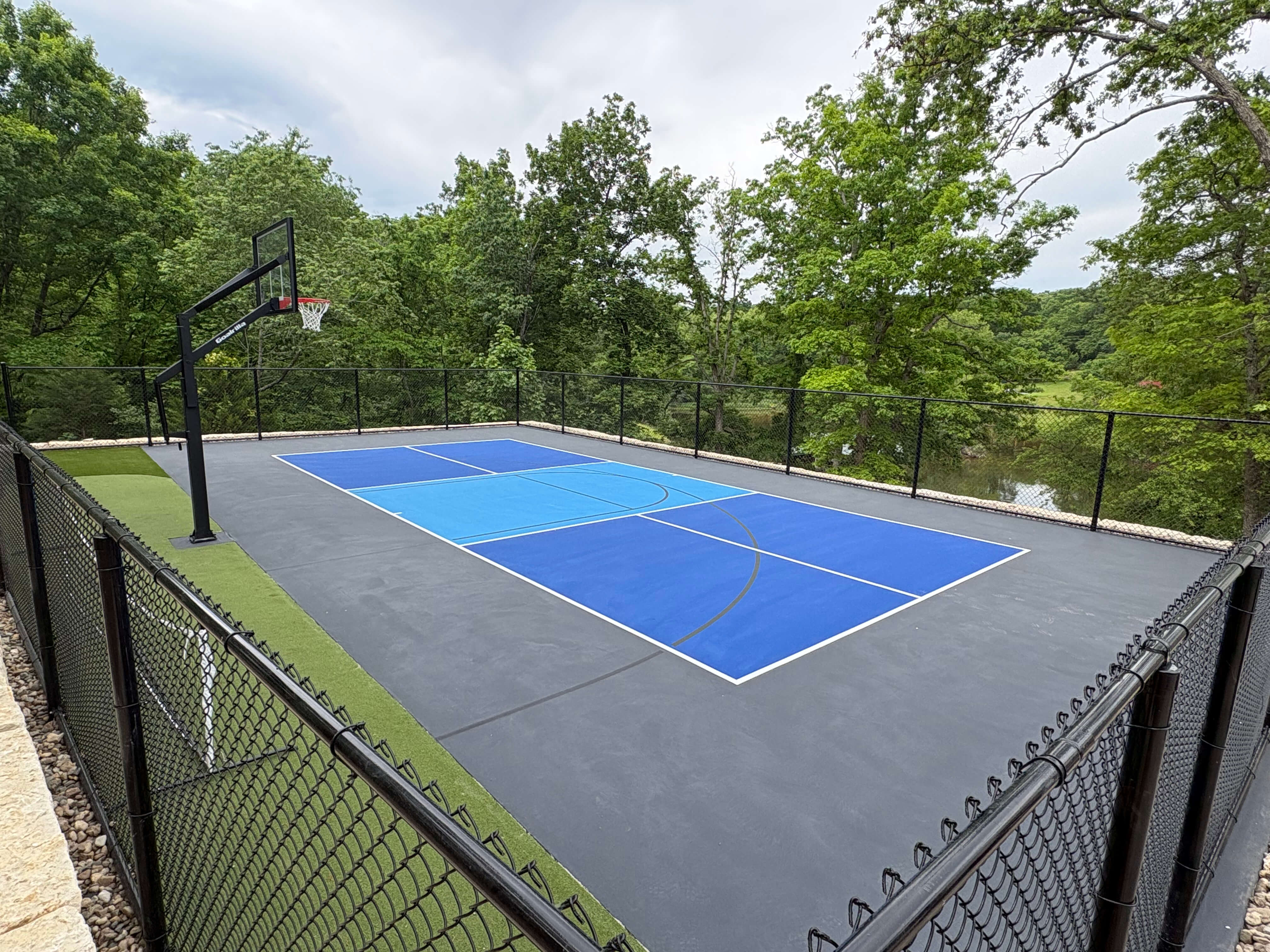
When people picture a backyard court, most are thinking bigger than just pickleball. They want something flexible that works for the whole family. That's one of the best parts of building a backyard court: once you build the foundation, it's simple and it doesn't cost much extra to design it for more than one use.
A multi-use court is exactly what it sounds like, a court built to handle more than one activity. Most often, that means combining pickleball and basketball, but there are all kinds of other sports you can mix in - tennis, volleyball, soccer, badminton, or simply a flexible space you can use for events and family gatherings.
What to Think About When Designing a Multi-Use Court
Size. Size determines your options more than anything else. A standard pickleball court, 60 by 30 feet, is usually enough to layer in half-court basketball with the lines overlapping. If you want full-court basketball or a tennis court added in, you'll need a bigger slab and a bigger base to start.
Equipment and add-ons. Once you know which activities you want, you'll need the right equipment to match, hoops, nets, goals, whatever the sport calls for.
A rollable net. This is the single most important piece for making a court genuinely flexible. A rollable net lets you move the net on and off the court as needed, which is what actually makes a court usable for more than pickleball. Without it, you're stuck with a fixed layout.
Other additions. A basketball hoop, a soccer goal, a second net for tennis, or even seating, all of these help you get more use out of the space, depending on what your family actually wants to do on it.
Striping. When lines for multiple sports sit on top of each other, they need to be easy to read at a glance. We pick line colors specifically to keep each sport's boundaries distinguishable, so the court stays usable and not confusing.
Cost. Adding more uses to your court isn't a major cost driver. Most of your budget goes into the foundation itself, the slab, base, and site work. Once that's in place, adding extra lines or colors adds very little. The real cost difference comes down to extra equipment (hoops, nets, fencing, lights), not the construction itself. High-quality hoops and nets typically cost between $1,000 and $3,000 each.
Built for Real Use, Not Just Show
As a touring pro, I don't think overlapping lines are a problem, even for advanced players. Multi-use courts hold up fine for serious training. The extra lines take a session or two to get used to, and after that they're not a distraction. In fact, I have played many official tournament matches on tennis court stadium foundations that were temporarily striped for pickleball.
Designing Your Multi-Use Court
If you're planning a court that needs to do more than one thing, size and layout decisions get more important, not less. Our backyard courts page covers the full build process, our dimensions guide breaks down sizing in more detail, and our pickleball court cost guide shows how equipment and add-ons factor into your total price.
Ready to design a court that works for your whole family? Book a free consult and we'll help you figure out the right layout for your space.
Ready to Build Your Court?
Book a free 15-minute call with Alex and get expert insight specific to your yard and goals.
Book Free Consult