How Long Does It Take to Build a Pickleball Court?
It's not a weekend project — but it's not a construction nightmare either. Here's the exact pickleball court build timeline from a pro player who manages builds across the country.
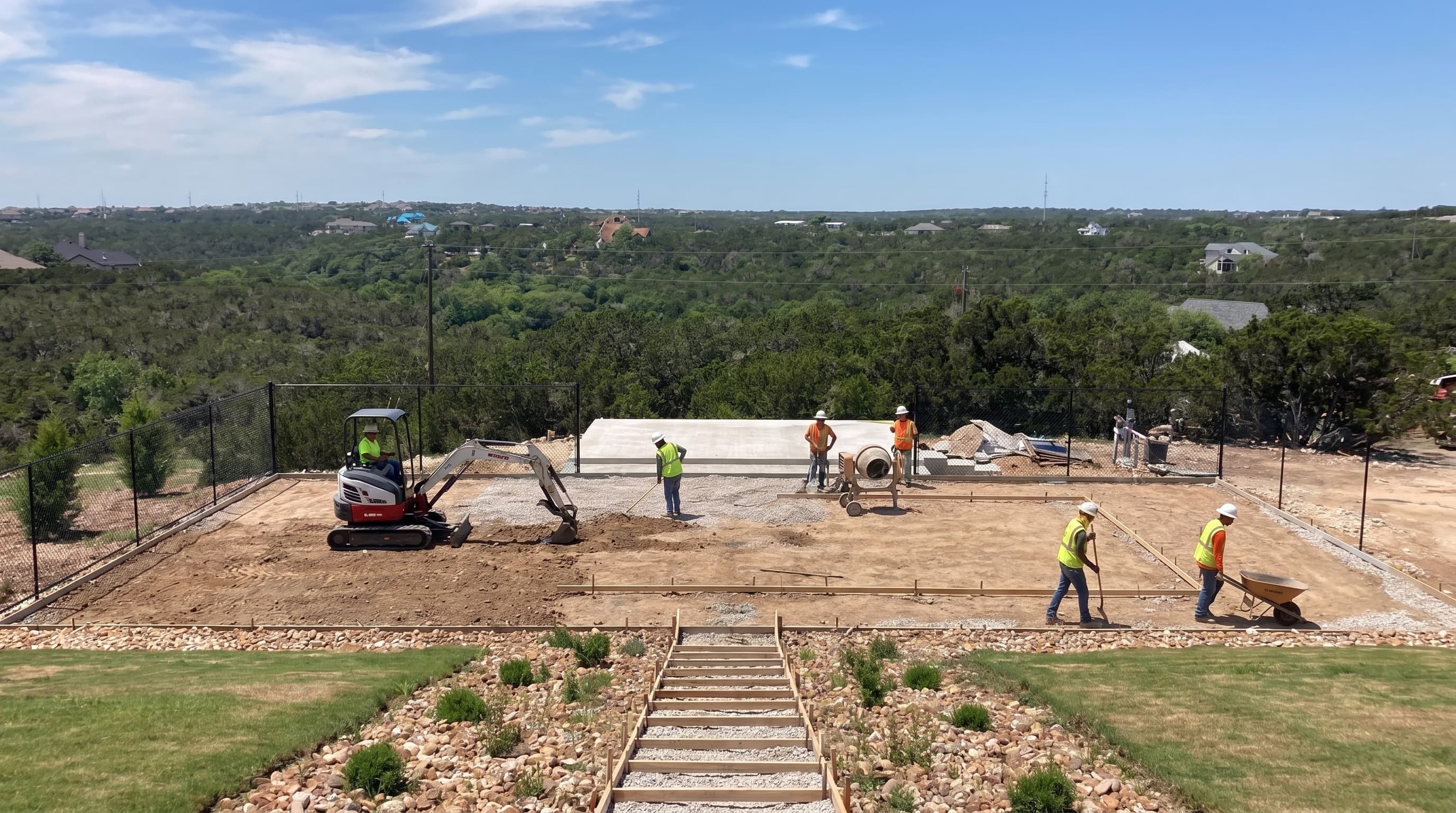
One of the most common questions I get from homeowners and property owners is: how long is this actually going to take? The answer surprises most people.
Building a pickleball court is not a weekend project. But it is also not the months-long construction nightmare that most major home projects turn into. When you are working with an experienced builder who understands both construction and how a court actually needs to play, it is a relatively straightforward process that requires only a handful of days of active work at your property.
The reason the total calendar time is longer than the active work time comes down to one thing: concrete cure time. Understanding that distinction is the key to having realistic expectations for your project. I'm a former professional pickleball player and my company manages court builds across the country. Here is our exact process, step by step.
Before Construction Begins: Planning and Contract
Before a single shovel hits the ground, there is a planning phase that most people do not account for. This is where we align on the exact court specs — size, foundation type, surface material, color scheme, and any add-ons like fencing or lighting. Once we agree on the design and sign a contract, the builder can pull any necessary permits and confirm the construction schedule.
This phase typically takes anywhere from a few days to a couple of weeks depending on how quickly decisions get made and how busy the local permit office is. I always tell clients to factor this in so they are not caught off guard. In warm-weather markets like Florida and the South, I tell clients to budget roughly eight to twelve weeks from contract signing to their first point of pickleball.
Step 1: Excavation and Site Prep (1 to 2 Days)
The first step of the actual build is getting your site ready for the foundation. Our crew comes out to your property, marks the court footprint — typically 60 by 30 feet for a standard single court — and prepares the area for concrete or asphalt.
This involves removing anything in the way: trees, plants, existing hardscape, or other landscape features. From there, the crew excavates and grades the area to create a flat, properly sloped base that will support the foundation and allow water to drain off the court correctly after rain.
For most properties this is a one to two day process. If your yard has significant slope or obstacles, it may take a bit longer — but it is rarely more than a few days even on challenging sites.
Step 2: Pour the Foundation and Let It Cure (4 to 6 Weeks)
This is the most important step in the entire build, and it is where the majority of your timeline lives. Before pouring, the crew will reinforce the sub-base with rebar or post-tension steel cables depending on the foundation type you have chosen. Then the concrete or asphalt is poured, which typically takes one to two days of active work.
Then comes the waiting.
Asphalt needs roughly one to two weeks to cure before it can be surfaced. Concrete needs significantly longer — typically four to six weeks — before it is ready to accept a surface coating. That timeline is weather dependent. In warm, dry climates like Florida, Texas, and Arizona, cure times are fairly predictable. In colder or wetter climates like New England or Colorado, rain and temperature swings can extend the cure period.
A lot of clients ask whether they can speed this up. There are additives that can accelerate concrete curing, but I generally advise against cutting corners here. The cure time exists for a reason. If you surface a slab before it has fully cured, you risk the coating not adhering properly — and surface problems that show up years down the road that could have been avoided entirely.
Step 3: Surfacing, Painting, and Net Installation (2 to 3 Days)
First, an acrylic sport surfacing material is applied across the entire court. This is what gives the court its smooth, consistent feel — proper ball bounce, reliable traction, and moisture drainage built into the texture. Surface options range from a standard acrylic finish to heavier-duty cushioned systems for players with joint concerns.
Once the surface is down, the court lines are painted in your chosen color scheme, followed by precision striping for the kitchen, service boxes, and baselines. The final piece is net installation — either a permanent in-ground post system or a high-quality rollable net, depending on your preference.
This entire stage typically takes two to three days. When it is done, the court is playable.
Step 4 (Optional): Fencing, Lighting, and Add-Ons (A Few Extra Days)
Fencing and lighting are optional but popular upgrades. The good news is they do not necessarily push back your first day of play.
Fencing is typically installed before surfacing, so it gets worked into the build sequence naturally. Lighting can be added after the court is already finished and playable. Depending on the complexity of the fencing or lighting system, these add-ons generally add a few days to about a week to the overall project.
If you are undecided on add-ons, I often advise clients to get the core court built first, play on it for a season, and then decide what extras are actually worth adding based on how they use the space.
Total Timeline: What to Expect
Adding it all up, most pickleball court builds take six to eight weeks from the start of construction to a playable court. Here is how that breaks down:
- Site prep and excavation: 1 to 2 days
- Foundation pour: 1 to 2 days of active work
- Cure time: 4 to 6 weeks (the bulk of your calendar time)
- Surfacing, painting, and net: 2 to 3 days
- Add-ons (optional): A few additional days
In warm-weather markets — Florida, Texas, Arizona, California — you can often land on the shorter end of that range, around six weeks from construction start. In colder or more variable climates, plan for the longer end.
The most important thing to remember is that the vast majority of that time is not a crew working at your property — it is concrete curing. That is not a delay. That is the build working exactly as it should. Factor in the planning phase before construction starts, and from contract signing to playing your first point, eight to twelve weeks is a realistic expectation for most projects.
Want to Know Your Exact Timeline?
Every project is different. Your timeline depends on your location, climate, foundation type, and the complexity of your build. The best way to get a real answer is to talk through your specific construction project.
I personally oversee every project we manage, and we have local builder teams across the country ready to visit your property and get started. Reach out here for a free consultation and I will give you a straight answer based on your specific situation.
Build it once. Build it right. That's our motto at Backyard Pickleball Builders.
Ready to Build Your Court?
Book a free 15-minute call with Alex and get expert insight specific to your yard and goals.
Book Free Consult